Surabaya (4/12) — “The discovery of microplastics in rainwater in Malang, Gresik, Surabaya, and Lamongan, along with the detection of 23 hazardous plastic chemicals in the blood of female waste sorters in Gresik, is a stark warning that microplastics have already entered the human body. This is clear evidence that the burning of plastic waste creates chronic exposure and threatens the health of East Java’s communities,” said Anjar, Action Coordinator of the GrowGreen Community.
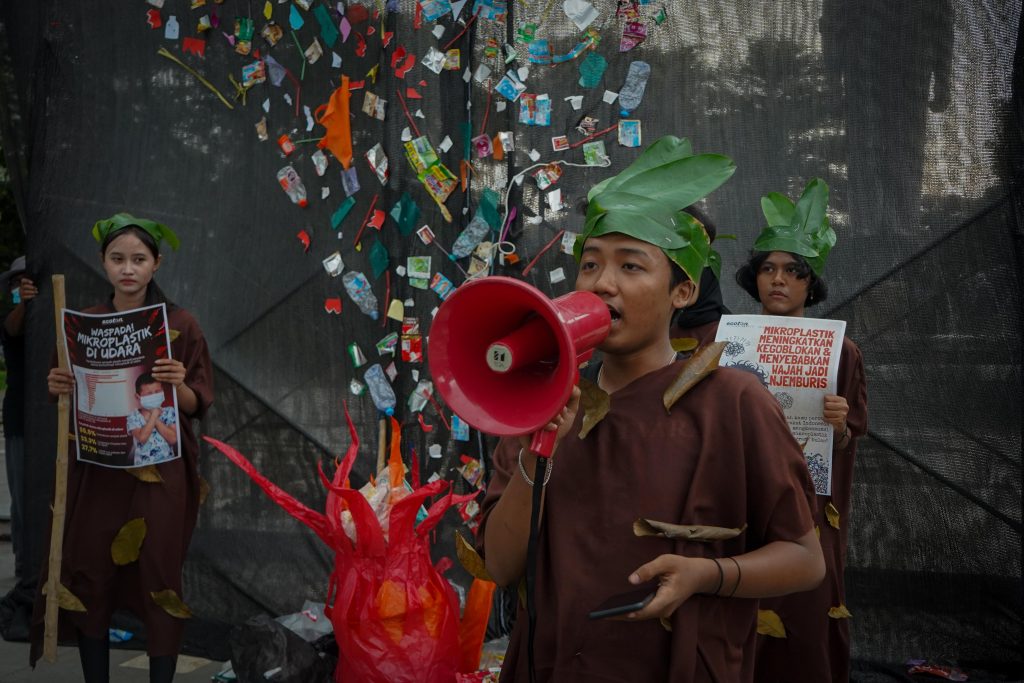
The demand served as the opening of a theatrical protest held in front of the Grahadi Building in Surabaya by environmental groups GrowGreen and Ecoton on Thursday, December 4, 2025. The action was intended as a warning to the public and the East Java government about the growing health threat posed by microplastics, and as an urgent appeal for East Java residents to stop the practice of burning plastic waste.

Research conducted by the Wonjin Institute for Occupational Environmental Health (WIOEH) Korea, Ecoton, and the Faculty of Medicine at Airlangga University on 32 female waste sorters in Gresik revealed alarming facts about human exposure to plastic-related chemicals. From the analysis of 65 types of chemicals in blood and urine samples, 23 harmful plastic chemicals were detected. These compounds include BPA, phthalates, PAHs, and flame retardants—each of which carries serious impacts on hormones, metabolic functions, reproductive health, and fetal development.
Previously, microplastics were also found in rainwater in Malang, Gresik, Surabaya, and Lamongan, indicating that communities in East Java now face microplastic exposure through two simultaneous pathways: contaminated air from burning plastic waste and direct contamination entering the bloodstream.

Ecoton Microplastics Laboratory Head, Rafika Aprilianti, stated, “This situation cannot be ignored. It is urgent for the government and industry to improve waste management systems, reduce sources of plastic pollution, and provide health protection for informal-sector workers—particularly waste pickers, who are the most vulnerable group. The combined findings of microplastics in rain and in human blood further emphasize that the microplastic threat is becoming increasingly real and immediate.”
Burning Plastic Waste and Its Impact on Cognitive Function: A Threat to the Lungs, Blood, and Brain
Furthermore, Sofi added that these findings are consistent with research from the Faculty of Medicine at the University of Indonesia, which revealed that microplastics can penetrate lung tissue, pass through the alveolar barrier, and enter the bloodstream. Once circulating in the blood, these particles are capable of crossing the blood–brain barrier (BBB). When microplastics and hormone-disrupting chemicals such as BPA and phthalates reach the brain, they can trigger neuroinflammation, oxidative stress, hormone-signaling disruptions, and even damage to brain cells. These mechanisms may lead to reduced cognitive function, memory impairment, decreased concentration, and long-term risks of neurodegenerative diseases.
Based on the chronology and factual findings above, we hereby present several environmental recovery recommendations to the East Java Provincial Government as follows:
- Issue a gubernatorial regulation fully banning the burning of plastic waste, to be implemented and harmonized with local regulations prohibiting waste burning in each district/city.
- Shift policy focus from waste management to reducing single-use plastics. Require local governments to provide non-incineration waste management facilities.
- Impose a moratorium on the construction and operation of incinerators. Set initial targets for reducing microplastic emissions from industries, followed by binding regulations to achieve zero microplastic emissions in the long term
- Establish a special task force by optimizing the roles of municipal police (Satpol PP) and environmental watchdog communities to strengthen monitoring and law enforcement against open burning of waste
- Strengthen health protection for waste pickers and informal-sector workers


 Ecoton (Ecological Observation and Wetlands Conservation) is a foundation focused on the conservation of river ecosystems and wetlands in Indonesia. We conduct scientific research, environmental education, and awareness campaigns to improve water quality and protect biodiversity.