Bawean, Gresik (December 15) – Concern for coastal environmental protection was demonstrated through the Children Environmental Action: Beach Clean-Up Activity held on Bawean Island, specifically at Lebak Village, Sangkapura Sub-district, Gresik Regency. The activity was organized by SDIT Al Huda Bawean in collaboration with Ecoton and the Human In Love Foundation (Korea), with support from the Lebak Village Government.
This activity also served as a response to findings from previous Ecoton research, which identified contamination of hazardous plastic-related chemical compounds in the blood of women living on Bawean Island. The beach clean-up was carried out as a mitigation effort against microplastic pollution and as a preventive action to protect children’s health.
The beach clean-up involved 30 students from SDIT Al Huda Bawean and 15 residents of Lebak Village, including representatives of the village government. Together, participants cleaned the coastal area, which serves not only as a tourist destination but also as a public space and playground for local children.

“This activity aims to instill environmental awareness in children from an early age through direct, hands-on action. We want students not only to learn in the classroom, but also to directly understand the impact of waste on coastal areas, while encouraging shared responsibility among schools, local communities, and the village government in protecting the coastal environment,” said Rissky Wahyu Saputra, Principal of SDIT Al Huda Bawean.
During the activity, a total of 945 kilograms of waste was collected, consisting of 70 bags of organic waste and 80 bags of inorganic waste. Field findings showed that the waste was dominated by single-use plastics, particularly food sachet packaging. Some packaging was estimated to date back to 1989, and remnants of pharmaceutical waste were also found, posing potential risks to both human health and the environment.

The Principal of SDIT Al Huda Bawean, Rissky Wahyu Saputra, stated that the results of the activity served as an important learning experience for all stakeholders.
“Based on our assessment, approximately 60–70 percent of the waste originated from local community activities, while the rest was carried in from other areas. Most concerning, we found food sachet packaging estimated to date back to 1989, as well as remnants of pharmaceutical waste. This clearly shows that plastic waste can persist for an extremely long time in coastal environments,” said Rissky.

He also emphasized the importance of protecting the health of children who regularly engage in activities along the coastline.
“This beach is a place where children play and swim. Without proper management and regular monitoring, we are concerned that hazardous substances could continuously come into contact with their skin or even be ingested. Going forward, we hope that every village with a coastal area will establish a routine beach cleanliness monitoring system,” he added.
 Students of SDIT Al Huda Bawean collect plastic waste as a mitigation response to microplastic findings in women on Bawean Island (Photo: Ecoton, 2025).
The Head of Lebak Village, Fadal, emphasized that his administration recognizes that coastal waste issues cannot be addressed by the village alone.
“We still need support and assistance, particularly in the provision and improvement of waste management facilities and services, so that waste management at the village level can be carried out more effectively and sustainably,” he said.
Meanwhile, Alaika Rahmatullah, Advocacy and Policy Division Manager at Ecoton, stated that the discovery of sachet waste along Bawean’s coastline reflects a systemic failure in single-use plastic management.
“The presence of sachet waste on Bawean’s coast highlights a systemic failure in the management of single-use plastics. Under the principle of Extended Producer Responsibility (EPR), producers must take full responsibility for the entire life cycle of the packaging they place on the market, including its collection and recovery. Without the active involvement of companies, the burden of plastic waste will continue to fall on local communities and village governments,”he explained.

Through the Children Environmental Action: Beach Clean-Up Activity, stakeholders hope this initiative will foster environmental awareness from an early age, strengthen the role of children as agents of change, and encourage active involvement from local communities and village governments in maintaining the cleanliness and health of Bawean Island’s coastal ecosystems. (*)

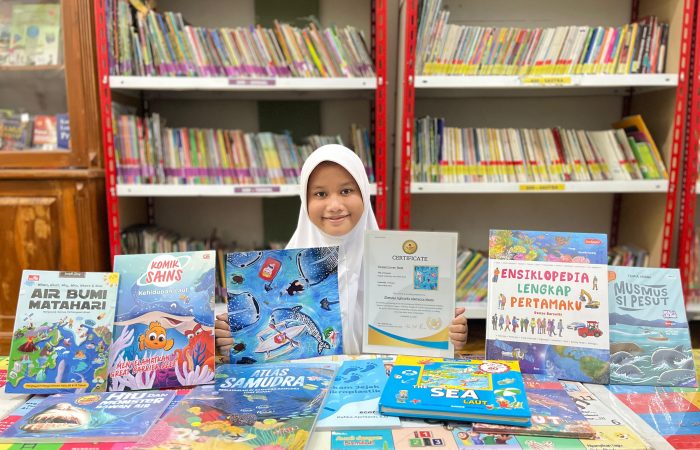
 Ecoton (Ecological Observation and Wetlands Conservation) is a foundation focused on the conservation of river ecosystems and wetlands in Indonesia. We conduct scientific research, environmental education, and awareness campaigns to improve water quality and protect biodiversity.