
Bandung, April 2026 — Plastic has long been recognized as a threat to oceans and wildlife. But following a series of studies conducted by Ecoton over the past several months, a new and far more alarming fact must now be confronted: plastic is already inside our bodies. Not just in our stomachs. But in our blood. In our sperm. Even in the amniotic fluid of pregnant women.
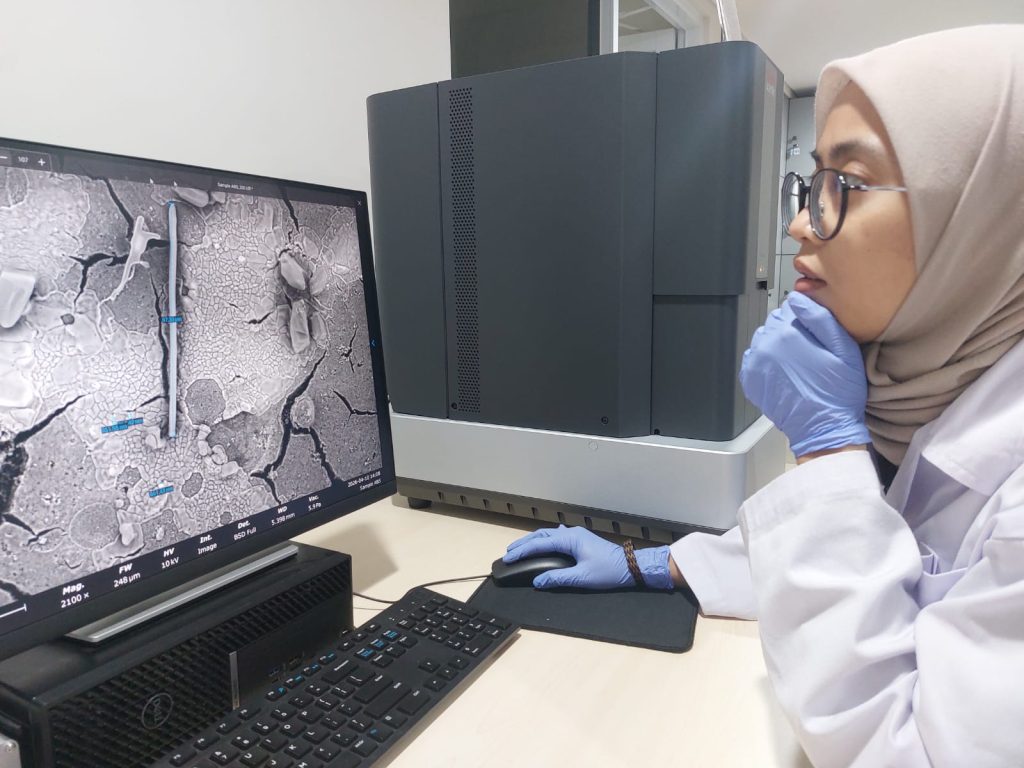
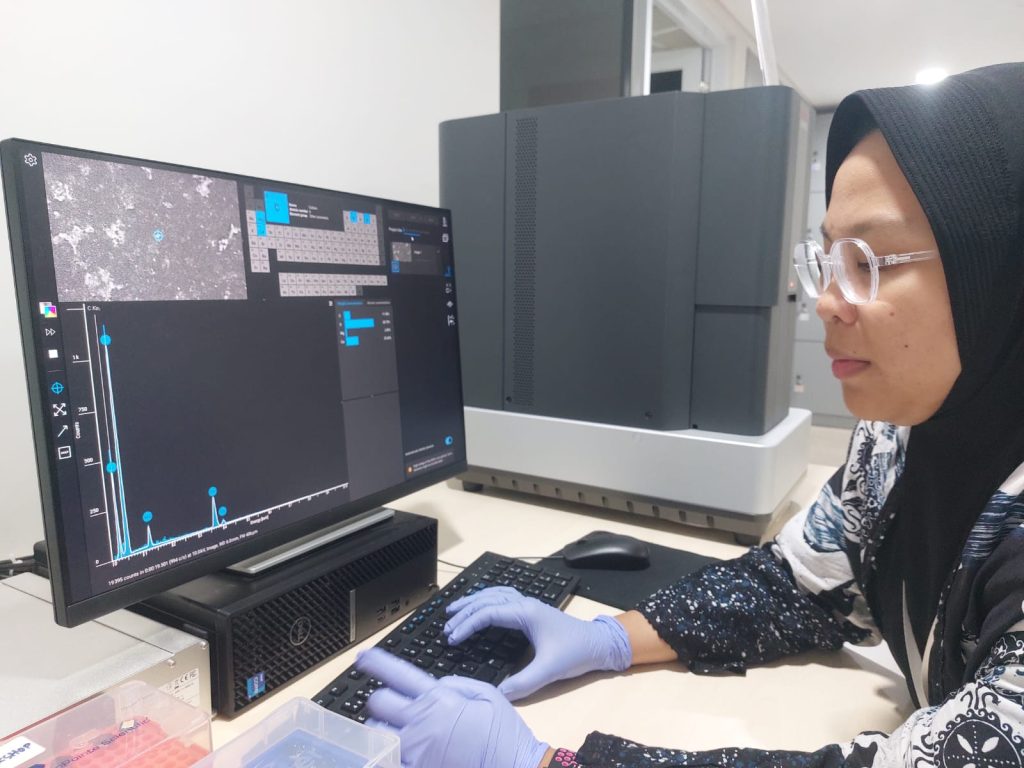
On Friday, April 10, 2026, the Ecoton research team collaborated with the Scientific Imaging Centre (SIC) at the Bandung Institute of Technology (ITB) to conduct advanced analysis using a Scanning Electron Microscope (SEM) — an instrument capable of detecting materials at a resolution of 10 nanometers, equivalent to one-millionth of a millimeter. The results confirmed what had long been suspected: nanoplastics measuring 200 to 800 nanometers were found in human blood and sperm samples.
“Using SEM, we found nanoplastics in blood and sperm at sizes of 200–800 nanometers,” said Rafika Aprilianti, Head of Ecoton’s Microplastics Laboratory. She added that the nanoplastics identified were in the form of fibers and fragments — the two most common particle shapes resulting from plastic degradation in the environment.
Smaller Than a Red Blood Cell
To grasp the gravity of this finding, some sense of scale is needed. Human red blood cells average 7.2 micrometers in diameter. Capillaries — the smallest vessels in the body — measure between 5 and 10 micrometers across. This means the nanoplastic particles found by Ecoton, which fall far below those dimensions, are not only capable of entering the bloodstream — they can penetrate the deepest tissues in the body without resistance.
“The definition of microplastics is plastic fragments smaller than 5 mm down to 1 micrometer,” explained Prigi Arisandi, Ecoton’s Founder. “If the size is below 5 micrometers, the plastic can enter erythrocytes — the red blood cells themselves.”
In a study involving 30 female subjects (20 waste workers and 10 university students from Blitar, Pacitan, Magetan, Lamongan, and Malang), an average of 9 microplastic particles per 1 ml of blood was found. The dominant polymers identified were:
- Polyethylene (PE/LDPE/HDPE): 32%
- Polyester: 28%
- Polyisobutylene: 24%
- PET: 16%
From the Clothes We Wear, to the Blood That Flows
The 28% share of Polyester is not merely a data point. Polyester is the backbone of the modern textile and fashion industry — from athletic wear to work uniforms. Every time synthetic clothing is washed, millions of microfibers are released into wastewater, flow into rivers, and eventually enter the ecosystem food chain.
That chain now ends inside human blood.
“The fact that textile polymers are the largest contributor in the blood of our research subjects shows that what we wear every day has the potential to become a poison flowing through our veins,” said a representative of the Ecoton research team.
This is not a metaphor. This is laboratory data.
What Happens Inside the Body
Once nanoplastics enter the bloodstream, the body reacts — but unfortunately, that reaction only worsens the damage. The immune system dispatches cells such as neutrophils, lymphocytes, and leukocytes to “attack” the foreign particles. The problem is that nanoplastics cannot be destroyed.
This failed assault generates free radicals — oxygen molecules that have lost electrons and turn aggressive, damaging cell walls, mitochondria, and cell nuclei. This condition is known as oxidative stress: the body’s cells become exhausted from continuously fighting something that cannot be defeated.
The consequences are wide-ranging:
Red Blood Cells & Hemoglobin: Nanoplastics interact directly with red blood cell membranes, triggering the risk of cell rupture (hemolysis). Hemoglobin released into the plasma can cause cell clumping that risks blocking blood vessels — raising the threat of stroke and cardiovascular disease.
The Immune System: White blood cells (macrophages) continuously release inflammatory signals (TNF-alpha and Interleukin) in a futile attempt to destroy the plastic. If this occurs chronically, it reduces white blood cell counts and broadly weakens the body’s immune defenses.
Blood Clotting: Nanoplastic interaction with platelets triggers the formation of blood clots (thrombi), which can cause coronary artery blockages and heart disease.
Premature Cell Aging: Cells are forced to expend extra energy to expel plastic particles, accelerating cellular aging and disrupting the process of new blood cell formation (hematopoiesis).
A Multigenerational Threat: Sperm, Amniotic Fluid, and the Future of Reproduction
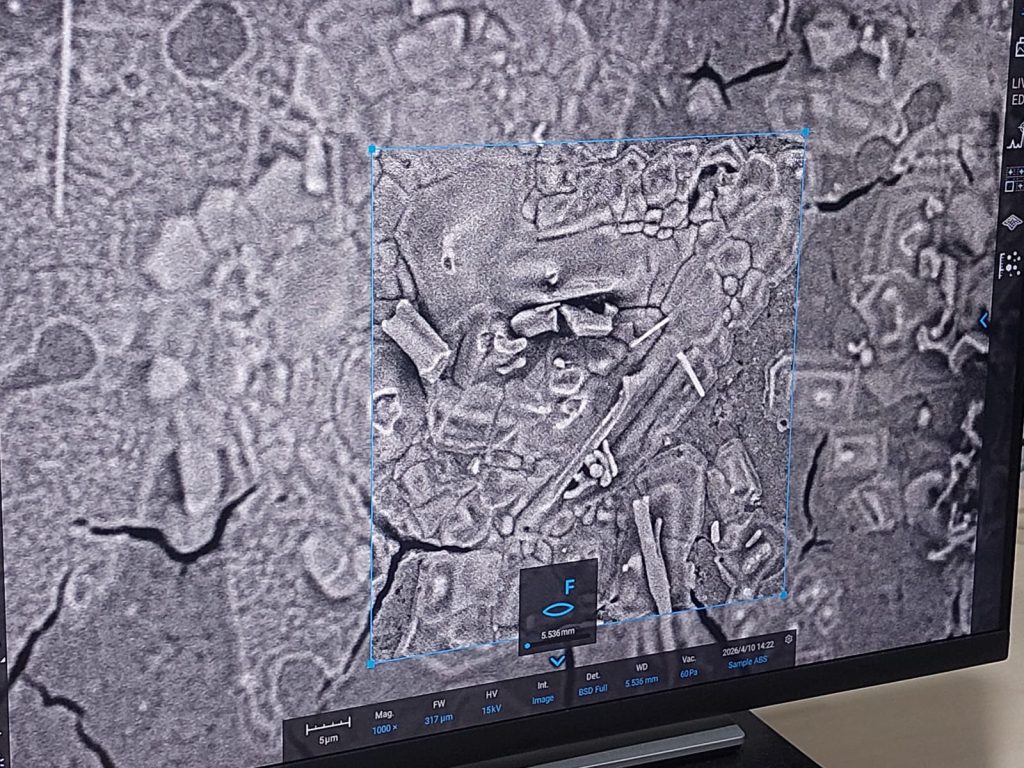
In February 2026, Ecoton conducted an initial study identifying microplastics in sperm and the amniotic fluid of pregnant women. From 4 sperm samples, contamination of 6–7 microplastic particles was found — ranging in size from 1.5 to 7.9 micrometers — all composed of polyethylene polymer.
Within sperm, the presence of nanoplastics triggers disruptions in reproductive cell development, leading to reduced fertility. The resulting oxidative stress gradually destroys male reproductive cells — culminating in diminished sperm quality and infertility.
Research conducted by Ecoton in collaboration with the Faculty of Medicine at Airlangga University Surabaya also found 3–4 polyethylene microplastic particles in amniotic fluid samples — drawn from 45 samples collected in Gresik, East Java. Even inside the womb, plastic had already arrived.
Microplastics in amniotic fluid have been shown to trigger fetal developmental disorders, nutritional deficits, inflammation, and an elevated risk of premature birth.
The implications stretch beyond a single generation. Philip J. Landrigan, a U.S. pediatric specialist, stated in the documentary The Plastic Detox that pregnant women exposed to toxic chemicals from plastic simultaneously expose the reproductive organs of three generations — the mother herself, the child she carries, and the eggs or reproductive cells already forming inside that fetus. This means our grandchildren could be affected by the plastic we consume today.

Recommendations: Concrete Steps You Can Start Today
The Ecoton research team urges the public to begin taking meaningful action:
- Reduce single-use plastic in daily food and beverage consumption. Bring your own water bottle, use reusable shopping bags, and avoid disposable plastic containers.
- Reduce the use of synthetic clothing. Every wash cycle of polyester garments releases microfibers that can ultimately end up inside our bodies.
- Consume natural anti-inflammatories such as turmeric, and increase intake of antioxidants through fresh fruits and vegetables.
- Stay physically active with exercises that boost energy and circulation, such as tai chi.
Research Team
This finding is the result of collaborative work by:
- Dr. dr. Lestari Sudaryanti, M.Kes — Lecturer, Faculty of Medicine, Airlangga University
- Dr. Daru Setyorini, Dipl. EM., S.Si., M.Si — Director, Ecoton
- Rafika Aprilianti, S.Si — Head of Ecoton’s Microplastics Laboratory
- Sofi Azilan Aini, S.KM — Ecoton Researcher
- Tasya Husna, SP — Editor, Journal of Environmental Pollution
- Prigi Arisandi, S.Si., M.Si — Founder, Ecoton
- Sri Astika — Biology Student, Universitas Negeri Surabaya
Ecoton (Yayasan Ecological Observation and Wetlands Conservation) is an environmental research and advocacy organization based in Gresik, East Java. Ecoton focuses on river pollution research, wetlands conservation, and evidence-based plastic reduction campaigns.

