Jombang (23/12) – A study conducted by 30 students of MTsN 16 Jombang in collaboration with the Ecology and Wetlands Conservation Study Institute (Ecoton) in Jombang found that rainwater samples from four locations—Tembelang District, Plandaan District, Ngoro District, and Jombang District—were contaminated with microplastics. The dominant type of microplastic identified was fiber, followed by fragments, filaments, and foam. “One of the largest sources of microplastics in rainwater is the burning of plastic waste, an activity that is still commonly practiced in the four districts of Jombang Regency,” said Rafika Aprilianti. Furthermore, the Head of Ecoton’s Microplastic Laboratory explained that 100% of the 30 participants involved in the study stated that waste management practices in their villages rely on open burning.
Jombang Rainwater Contaminated with Microplastics
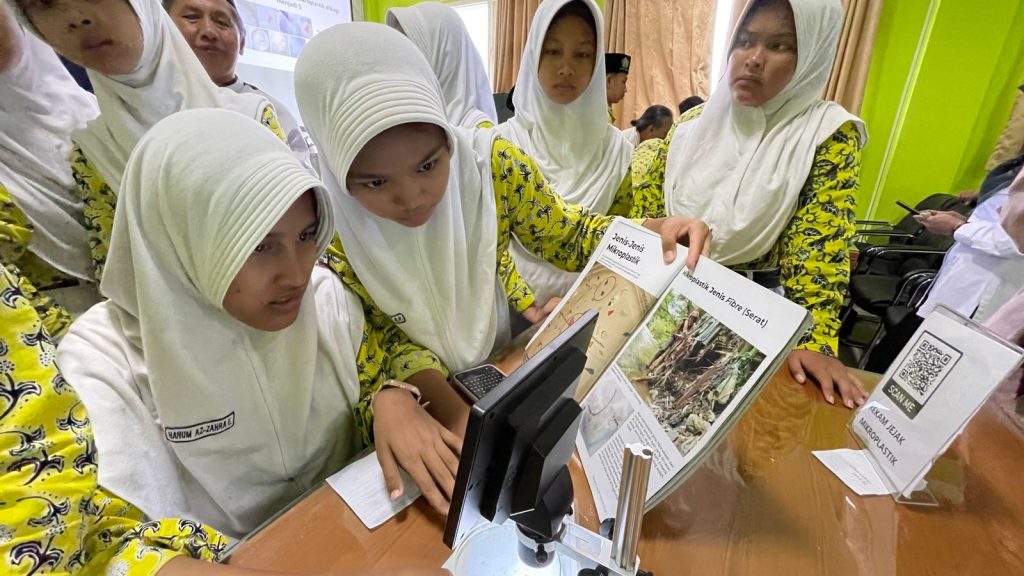
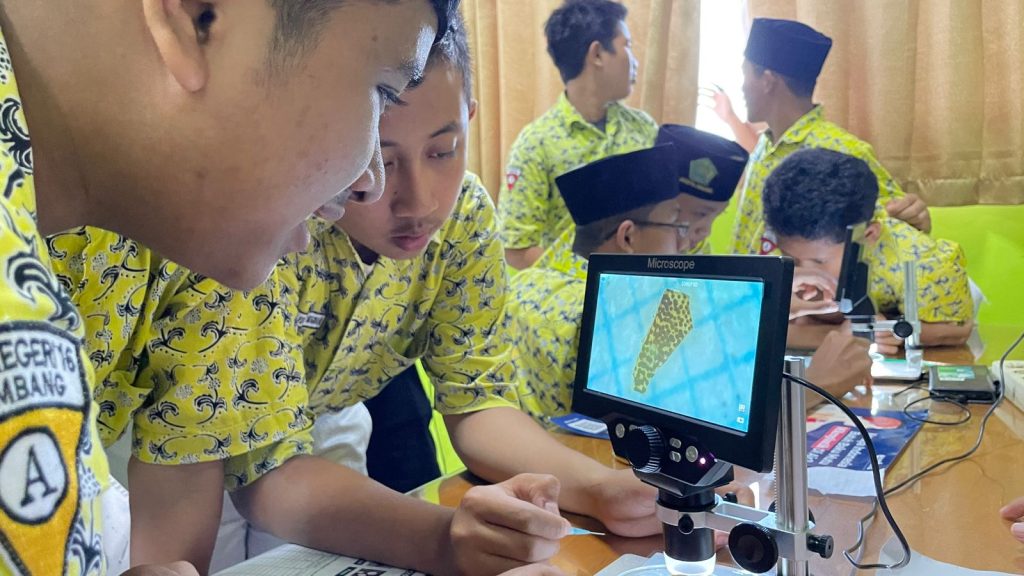
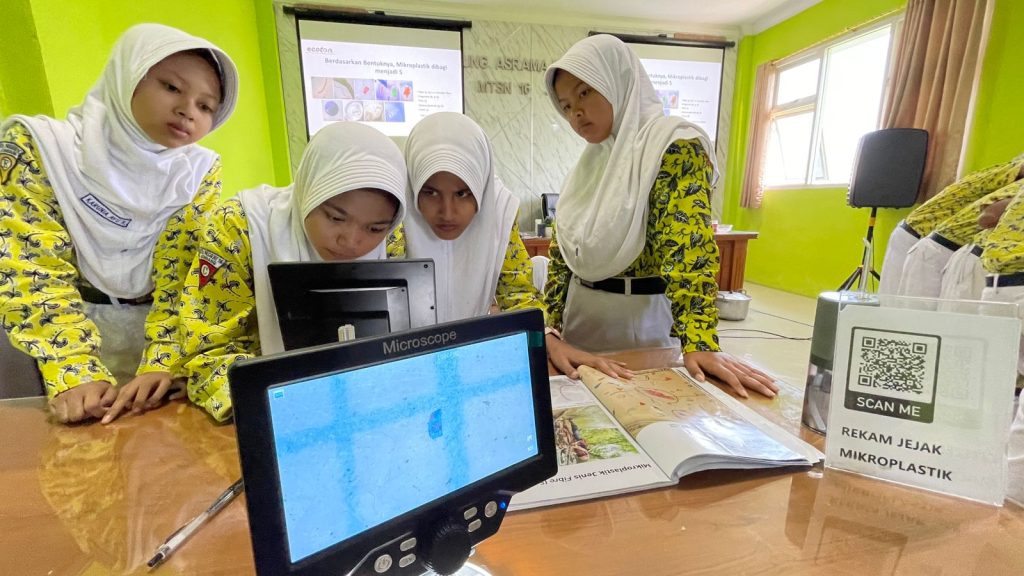
rom 18–22 December 2025, the Young Researchers Team of MTsN 16 Jombang collected rainwater samples from four locations: Karang Mojo Village (Plandaan District), Tambak Rejo Housing Area (Jombang District), Tembelang Village (Tembelang District), and Genuk Watu Village (Ngoro District).“We collected the rainwater using aluminum pots to prevent plastic contamination. The pots were placed on chairs at a height of 1 to 2 meters above ground and left exposed for several hours during rainfall,” said Ananda Ayu Renia. The 10th-grade student of MTsN 16 Jombang further explained that approximately one liter of rainwater was successfully collected, transferred into glass jars, and then examined under a stereo microscope. The microplastics were identified using Ecoton’s Microplastic Trace Identification Guidebook.
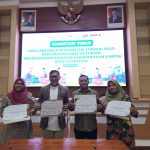
The research was conducted in collaboration with Ecoton and in partnership with the Indonesian Journalists Association (PWI) as part of a citizen science program, held at MTsN 16 Jombang on Tuesday (23/12/2025). Senior Ecoton researcher Amirudin Muttaqin stated that the most frequently detected type of microplastic was fiber or plastic fibers. “These plastic fibers commonly originate from the degradation of synthetic textiles, laundry activities, and plastic dust transported by wind,” Amirudin explained.
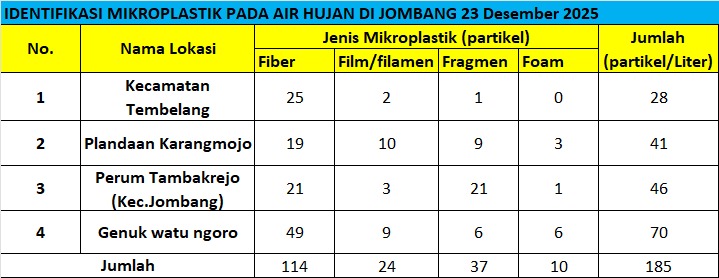
Head of Ecoton’s Microplastic Laboratory, Rafika Aprilianti, explained that fragments typically originate from broken pieces of hard plastics, while film and foam are closely associated with plastic bags, single-use packaging, and styrofoam. “This composition indicates that the sources of microplastics are closely linked to everyday human activities,” Rafika Aprilianti stated. Further emphasizing the findings, the alumna of Tebuireng Islamic Boarding School, Jombang, stressed that the results clearly demonstrate the proximity of pollution sources to daily human life. “Fragments come from hard plastics, while film and foam are related to plastic bags, single-use packaging, and styrofoam. This is evidence that microplastics are born from our daily routines,” she said.
Genuk Watu Ngoro Village Has the Highest Microplastic Levels in Rainwater
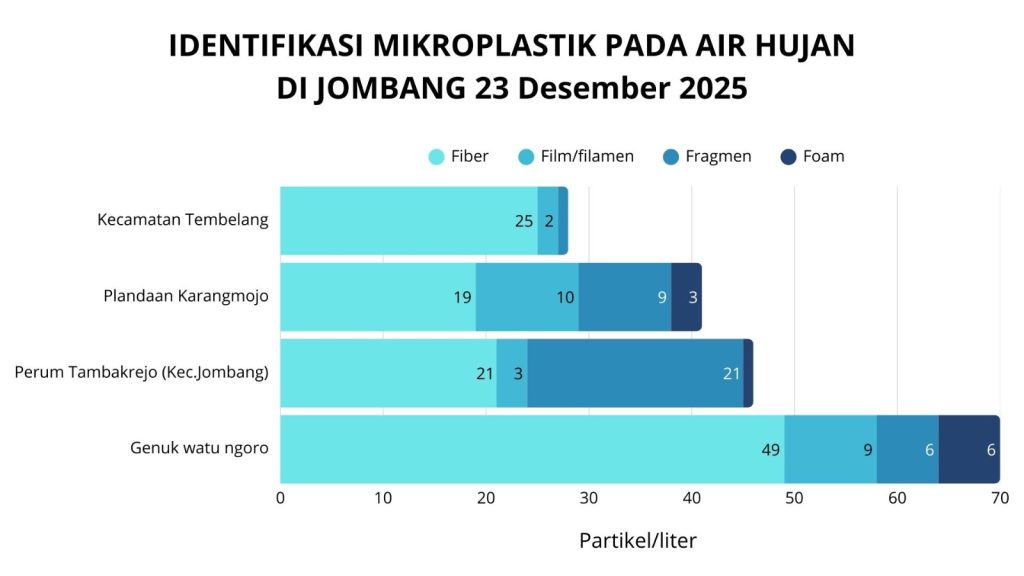
Among the four sampling sites, the highest level of microplastic contamination was recorded in Genuk Watu, Ngoro, with 70 particles per liter of rainwater. This was followed by Tambakrejo Housing Area with 46 particles per liter, Karangmojo, Plandaan with 41 particles per liter, and Tembelang District with 28 particles per liter.
According to Rafika Aprilianti, these differences in contamination levels are believed to be influenced by residential density, industrial activities, vehicle traffic, as well as wind direction and speed.
Microplastics are plastic fragments or particles smaller than 5 millimeters down to 1/1000 of a millimeter, roughly equivalent to a human hair split into seven strands. Due to their extremely small size, these particles can remain suspended in the air for long periods before eventually being deposited through rainfall.
These findings are further reinforced by statements from participants of the citizen science training, who reported that open burning of waste remains a common practice in their communities.
In addition to being burned, some plastic waste is also buried or disposed of into rivers. These practices contribute to the release of plastic particles into the air and the surrounding environment.
Student Action for a Microplastic-Free Jombang
“I hope that participants of today’s microplastic training will share the knowledge they have gained with the community about the dangers of microplastics and the urgent need to reduce single-use plastic consumption,” said Hj. Emi Tahmidah, MA.
The Principal of MTsN 16 Jombang further explained that the school canteen has already implemented zero-waste practices by reducing single-use plastics and encouraging students to bring reusable tumblers as an effort to minimize plastic bottle waste.
“This activity is a valuable opportunity for MTsN 16 Jombang to better understand the dangers of microplastics. Concrete actions are needed to address the increasingly real threat of microplastic pollution in our environment. The discovery of microplastics in rainwater must drive greater seriousness in environmental management,” Emi Tahmidah emphasized.
“Rainwater has long been considered relatively clean. In reality, rainwater now has the potential to become a medium for microplastic exposure to humans, soil, and surface water,” she added.
Prigi Arisandi, Founder of Ecoton, stressed that the presence of microplastics in rainwater is strong evidence that plastic pollution moves across environmental media and has a high potential to enter the human body. He explained that microplastics can enter the human body through three main pathways:
- Food and beverages consumed orally, processed through the digestive system, and absorbed into the bloodstream
- Air inhalation, entering through the respiratory system and into the lungs
- Skin contact, through the use of cosmetics such as soaps, skin-lightening products, skincare items, perfumes, facial cleansers, and other personal care products
According to Prigi Arisandi, the findings of this study serve as a strong warning to the Jombang Regency Government and the public to abandon waste management practices based on open burning and to establish strong regulations to reduce the use of single-use plastics. “Without serious intervention, microplastics will continue to accumulate in the environment and throughout the human life chain, posing a significant threat to human health,” Prigi Arisandi stated.
For the students involved, the activity provided new experiences and heightened environmental awareness. Ananda Ayu Renia P, a 9th-grade student at MTsN 16 Jombang, admitted she was shocked by the observation results.
“Spending our school holiday this way was both enjoyable and eye-opening. We learned how to observe rainwater under a microscope and discovered microplastic fibers, filaments, and fragments,” she said.
Ananda also expressed her surprise at finding plastic particles in rainwater. The experience motivated her to begin applying the 3R principles (reduce, reuse, and recycle) in her daily life. “Now I understand that the plastic waste we produce can come back to us in unexpected ways,” she added.

 Ecoton (Ecological Observation and Wetlands Conservation) is a foundation focused on the conservation of river ecosystems and wetlands in Indonesia. We conduct scientific research, environmental education, and awareness campaigns to improve water quality and protect biodiversity.